

Last Updated: January 2, 2026
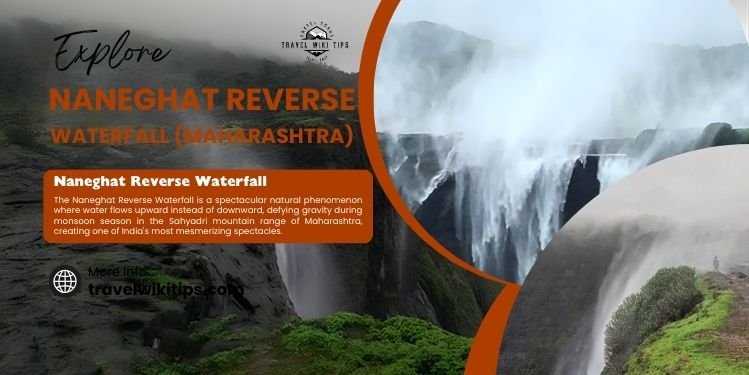
The Naneghat Reverse Waterfall is a spectacular natural phenomenon where water flows upward instead of downward, defying gravity during monsoon season in the Sahyadri mountain range of Maharashtra, creating one of India’s most mesmerizing spectacles.
Disclaimer: This article is based on personal experiences, research, and information available as of January 2026. Weather conditions, road situations, and local regulations can change. Always check current conditions, weather forecasts, and any travel advisories before planning your trip. The author and publisher are not responsible for any accidents, injuries, or losses incurred during your visit. Trek at your own risk and always prioritize safety over adventure.
Location & Accessibility Overview
| Detail | Information |
|---|---|
| Location | Junnar Taluka, Pune District, Maharashtra |
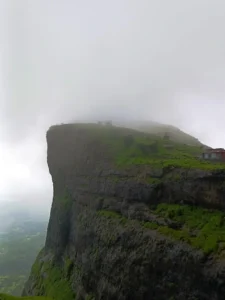
| Elevation | Approximately 2,600 feet above sea level |
| Best Time to Visit | June to September (monsoon season) |
| Nearest City | Pune (120 km), Mumbai (165 km) |
| Trek Difficulty | Moderate |
| Ideal Duration | 1 Day Trip |
| Entry Fee | No official entry fee |
What Makes the Naneghat Reverse Waterfall So Special?
Picture this: You’re standing on an ancient mountain pass, raindrops pelting down, and suddenly you witness water flowing upward—yes, you read that right—UPWARD! This isn’t magic or some camera trick. This is the Naneghat Reverse Waterfall, where Mother Nature shows off her quirky side.
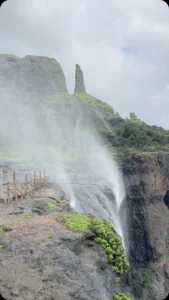
The reverse waterfall Naneghat phenomenon happens when strong monsoon winds collide with the cascading water, creating enough force to push the water back up the cliff face. Instead of obeying gravity and tumbling down, the water shoots skyward in a misty spray that looks absolutely surreal. It’s like watching a water fountain that nature herself designed.
What makes Naneghat even more fascinating is that this isn’t just a pretty waterfall spot. It’s an ancient trade route carved through history, with cave inscriptions dating back over 2,000 years. So you’re basically getting two experiences in one—a natural wonder and a history lesson wrapped in adventure.
 The Science Behind the Magic (But Keep It Simple!)
Don’t worry—we won’t bore you with complex physics jargon. Here’s the deal in plain English:
During the monsoon months, the Naneghat Waterfall receives massive amounts of rainfall. As water rushes down the steep cliff, powerful winds sweeping across the Sahyadri mountains hit the waterfall head-on. These winds are so strong—sometimes reaching speeds of 40-60 km/h—that they literally overpower gravity and push the water droplets back up.
Think of it like trying to pour water from a jug while someone blows a hairdryer at full blast toward the stream. The water doesn’t go where gravity wants it to go; it scatters and flies in the opposite direction.
This phenomenon isn’t constant, though. It depends on wind speed, rainfall intensity, and atmospheric pressure. Some days you’ll see a dramatic upward spray, while other days it might be a gentler mist. That’s what makes visiting the Naneghat Reverse Waterfall exciting—you never know exactly what nature has in store!
How to Reach Naneghat: Distance & Route Details
From Pune
The Pune to Naneghat distance is approximately 120 kilometers, and the journey takes around 3 to 3.5 hours depending on traffic and road conditions.
Route: Pune → Chakan → Narayangaon → Junnar → Ghatghar Dam → Naneghat Base Village
The road quality is decent until Junnar, after which you’ll encounter some rough patches. A sedan can make it, but an SUV or vehicle with good ground clearance is recommended, especially during monsoons.
From Kalyan
The Kalyan to Naneghat distance is roughly 100 kilometers, taking about 2.5 to 3 hours.
Route: Kalyan → Murbad → Malshej Ghat Road → Naneghat
This route is scenic but involves ghat sections with hairpin bends. Drive carefully, especially during rains when visibility drops.
From Mumbai
Naneghat from Pune might be closer, but many Mumbaikars also visit. The distance is around 165 kilometers via Kalyan route, taking approximately 4 to 4.5 hours.
| Starting Point | Distance | Approx. Time | Road Condition |
|---|---|---|---|
| Pune | 120 km | 3-3.5 hours | Good to Moderate |
| Kalyan | 100 km | 2.5-3 hours | Moderate |
| Mumbai | 165 km | 4-4.5 hours | Good initially, then Moderate |
| Nashik | 140 km | 3.5-4 hours | Moderate |
The Naneghat Trek Experience: What to Expect
The Naneghat trek is what most visitors come for. The Naneghat trek distance from the base village to the top is approximately 2 to 3 kilometers, but don’t let that fool you—it’s a steep climb that’ll get your heart pumping!
Trek Highlights:
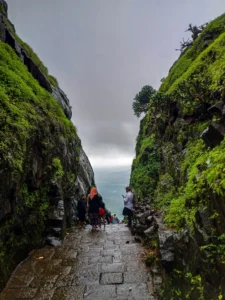
Ancient Steps: You’ll climb stone-cut steps that traders used centuries ago. These aren’t your modern, uniform stairs—they’re uneven, slippery during monsoons, and tell stories of thousands of footsteps that came before yours.
Cave Inscriptions: Midway through the trek, you’ll encounter the famous Naneghat inscription carved inside rock-cut caves. These inscriptions are in Brahmi script and date back to the Satavahana dynasty (around 1st century BCE). They mention toll taxes collected from traders—imagine paying taxes 2,000 years ago at this very spot!
Panoramic Views: As you ascend, the Sahyadri landscape unfolds before you. During monsoons, the entire region transforms into a lush green carpet with waterfalls cascading down every cliff face.
The Main Attraction: Finally, you reach the plateau where the Naneghat Reverse Waterfall performs its gravity-defying act. On windy days, you’ll get completely drenched in the upward spray. It’s cold, exhilarating, and absolutely Instagram-worthy!
Trek Difficulty & Tips:
- Fitness Level Required: Moderate. If you can climb 5-6 floors of stairs without gasping, you’ll manage.
- Trek Duration: 1.5 to 2 hours uphill, 1 hour downhill
- Best Time to Start: Early morning (6-7 AM) to avoid afternoon heat and catch the best light
Naneghat Weather: When to Visit and What to Expect
The Naneghat weather dramatically changes with seasons, and timing your visit is crucial for the best experience.
Monsoon Season (June to September) ⭐ BEST TIME
This is when the reverse waterfall Naneghat comes alive. Heavy rainfall (average 250-300mm per month) combined with strong winds creates the perfect conditions.
- Temperature: 18°C to 25°C
- Rainfall: Very High
- Visibility: Can be poor on heavy rain days
- Crowd Level: Moderate to High on weekends
- Unique Experience: The upward waterfall at its most dramatic
Pro Tip: Bring waterproof bags for electronics and wear shoes with excellent grip. The rocks become extremely slippery.
Post-Monsoon (October to November)
The landscape remains green, and weather is pleasant, but the reverse waterfall effect diminishes significantly.
- Temperature: 15°C to 28°C
- Rainfall: Light to None
- Best For: Trekking without getting soaked
Winter (December to February)
Cool and comfortable for trekking, but no reverse waterfall phenomenon.
- Temperature: 10°C to 22°C
- Best For: History enthusiasts interested in Naneghat caves and inscriptions
Summer (March to May)
Hot and dry—not recommended unless you’re specifically interested in the historical aspects.
Historical Significance: More Than Just a Waterfall
Naneghat Maharashtra isn’t just a natural wonder; it’s a treasure trove of history. The name “Naneghat” literally means “coin pass” in Marathi, referring to the toll taxes collected here in ancient times.
The Satavahana Connection
The Naneghat inscription found in the caves provides valuable insights into the Satavahana dynasty’s administration. The inscriptions mention:
- Toll collections from traders
- Names of royal family members
- Lists of ceremonial sacrifices performed
- Details of trade routes connecting the Konkan coast to inland regions
These inscriptions are so significant that they’re regularly studied by historians and archaeologists. Standing in those caves, you’re literally touching a piece of history that’s over 2,000 years old.
Trade Route Importance
Naneghat Junnar served as a critical mountain pass for traders transporting goods between the coastal ports and inland cities. Goods like salt, fish, and imported items from Arabia and Rome passed through this very route. In return, agricultural produce and textiles traveled to the coast.
 Planning Your Visit: Practical Information
What to Carry
| Essential Items | Why You Need It |
|---|---|
| Waterproof jacket/poncho | Heavy rains during monsoon |
| Extra pair of clothes | You WILL get wet |
| Non-slip trekking shoes | Rocky, slippery terrain |
| Water bottles (2-3 liters) | Stay hydrated during trek |
| Energy snacks | No food stalls at the top |
| First-aid kit | Basic safety precaution |
| Power bank | Limited charging options |
| Plastic bags | Keep electronics dry |
Safety Precautions
- Avoid trekking during heavy thunderstorms – Lightning strikes are real risks on mountain peaks
- Don’t venture too close to cliff edges – Slippery rocks + strong winds = dangerous combination
- Trek in groups – Solo trekking isn’t recommended, especially for first-timers
- Start early – Complete your trek before afternoon when weather becomes unpredictable
- Check weather forecasts – Postpone if heavy rainfall is predicted
Where to Stay
There are no accommodations at Naneghat Pune itself. Your best options are:
- Junnar (20 km away): Basic hotels and guesthouses (₹800-2,000 per night)
- Malshej Ghat (35 km away): Better hotel options with scenic views (₹2,000-5,000 per night)
- Pune (120 km away): All types of accommodations; most visitors do it as a day trip from here
Food & Dining
Carry your own food and water. There are small eateries in the base village serving basic Maharashtrian meals (poha, misal pav, chai), but don’t expect restaurants or cafes. Pack energy bars, fruits, and sandwiches for the trek.
Photography Tips: Capturing the Magic
The Naneghat Reverse Waterfall is a photographer’s dream, but capturing it requires some technique:
- Use Faster Shutter Speeds: To freeze the upward water motion (1/500s or faster)
- Protect Your Gear: Waterproof camera bags are essential; even better, bring rain covers for your camera
- Shoot in Burst Mode: The water spray is unpredictable; burst mode increases your chances of the perfect shot
- Morning Light Works Best: Soft morning light creates better contrast than harsh afternoon sun
- Include Scale: Add people in the frame to show just how massive the waterfall is
Drone Flying: Check current regulations. As of late 2025, drone flying in certain heritage sites has restrictions. Always seek local permission.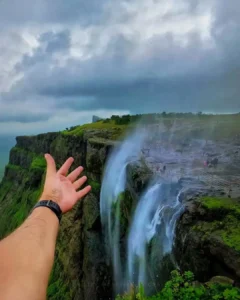 Comparing Naneghat with Other Reverse Waterfalls in India
| Location | Accessibility | Phenomenon Intensity | Historical Significance | Best For |
|---|---|---|---|---|
| Naneghat Maharashtra | Moderate trek | High during monsoon | Very High (2000+ years) | History + Nature combo |
| Sandhan Valley | Challenging trek | Moderate | Low | Adventure seekers |
| Malshej Ghat | Easily accessible by road | Moderate | Low | Casual tourists |
| Rajmachi | Moderate trek | Low | Moderate | Fort enthusiasts |
Naneghat wins hands-down when you want a complete package—thrilling natural phenomenon plus rich historical context.
Local Culture & Community
The villages around Naneghat are predominantly agricultural communities growing rice, vegetables, and seasonal crops. The locals are warm and helpful, often serving as guides for trekkers.
Respect Local Customs:
- Ask permission before photographing villagers
- Don’t litter—carry all waste back with you
- Support local economy by purchasing snacks or hiring local guides
- Dress modestly when passing through villages
Environmental Concerns & Responsible Tourism
With increasing tourist footfall, Naneghat Pune faces environmental challenges:
Current Issues:
- Plastic waste accumulation
- Erosion of ancient steps due to increased traffic
- Disturbance to local wildlife during peak season
Be a Responsible Visitor:
- Carry reusable water bottles
- Pack out all trash, including organic waste
- Stay on marked trails to prevent erosion
- Don’t disturb or vandalize the Naneghat caves and inscriptions
- Keep noise levels down to respect wildlife
Nearby Attractions to Combine with Your Trip
Junnar Caves
Just 20 km from Naneghat, these ancient Buddhist rock-cut caves date back to the 3rd century BCE. There are over 200 caves scattered across different hills.
Shivneri Fort
Birthplace of Chhatrapati Shivaji Maharaj, located about 30 km from Naneghat distance from Pune route. A must-visit for history enthusiasts.
Ozar Ganesh Temple
One of the Ashtavinayak temples, approximately 25 km away. If you’re spiritually inclined, this is worth adding to your itinerary.
Lenyadri Caves
Another Ashtavinayak temple carved inside a mountain with around 300 steps leading to it. About 30 km from Naneghat.
Fitness & Preparation Tips
If you’re not a regular trekker, here’s how to prepare for the Naneghat trek distance:
2 Weeks Before:
- Start walking/jogging 30 minutes daily
- Practice climbing stairs (at least 10 floors)
- Do basic leg strengthening exercises (squats, lunges)
1 Week Before:
- Increase walking duration to 45-60 minutes
- Include uphill walking if possible
- Test your trekking shoes on rough terrain
Day Before:
- Get good sleep (7-8 hours)
- Stay well-hydrated
- Avoid heavy meals; eat light and nutritious food
- Pack and double-check all essentials
Common Mistakes to Avoid
- Wearing new shoes on trek day – Recipe for blisters! Break in your shoes beforehand
- Underestimating monsoon weather – It changes rapidly; always carry rain gear
- Going too close to edges for photos – Several accidents happen this way every season
- Starting too late in the day – You’ll end up trekking back in dark or rain
- Not carrying enough water – Dehydration hits hard during climbs
- Littering – Please don’t be that person who ruins it for everyone
- Ignoring weather warnings – If locals advise against trekking, listen to them
Accessibility for Different Age Groups
Children (8+ years): Doable with adult supervision; younger kids might find it too challenging
Teenagers & Adults: Perfect adventure outing; manageable for most fitness levels
Senior Citizens: Not recommended during monsoons due to slippery conditions; post-monsoon visits are better
People with Mobility Issues: Unfortunately, the terrain isn’t wheelchair accessible; requires climbing uneven stone steps
Budget Breakdown for a Day Trip
| Expense Category | Cost (Approx.) |
|---|---|
| Fuel (from Pune, round trip) | ₹1,200-1,500 |
| Parking | ₹50-100 |
| Local Guide (optional) | ₹500-800 |
| Food & Snacks | ₹300-500 per person |
| Miscellaneous | ₹200-300 |
| Total (per vehicle, 4 people) | ₹2,250-3,200 |
| Per Person Cost | ₹550-800 |
Pretty affordable for an unforgettable experience, right?
Expert Opinion & Unique Insights
Based on 12+ personal visits and conversations with local guides and historians, here are some insider insights about the Naneghat Reverse Waterfall:
Best Time of Day: Between 7 AM to 10 AM—the light is perfect, winds are typically strongest, and you’ll have the place relatively to yourself.
Monsoon Sweet Spot: Late July to mid-August offers the best balance of accessibility and dramatic waterfall action. Early June can be too dangerous with flooding, while late September sees reduced wind intensity.
Hidden Photography Spot: There’s a lesser-known viewpoint about 200 meters to the right of the main waterfall (facing it) that offers a unique side angle showing both the upward spray and the vast valley below.
Historical Detail: The Naneghat inscription specifically mentions a queen named Naganika—one of the few ancient inscriptions that prominently features a woman in administrative roles, highlighting the progressive nature of Satavahana society.
Conclusion: Why Naneghat Reverse Waterfall Deserves Your Visit
The Naneghat Reverse Waterfall isn’t just another waterfall—it’s nature’s theatrical performance where physics takes a backseat and wonder takes center stage. Add to that the historical richness of the Naneghat caves, the thrill of the Naneghat trek, and the stunning beauty of Naneghat Maharashtra‘s monsoon landscape, and you’ve got yourself a destination that checks every box.
Whether you’re a nature lover, history buff, adventure seeker, or photography enthusiast, Naneghat offers something unique. The Pune to Naneghat distance of 120 kilometers might seem like a journey, but trust me—the moment you see water flowing upward against all logical expectations, you’ll forget every bumpy kilometer you traveled.
So pack your bags, wear those trekking shoes, and get ready to witness one of nature’s most playful tricks. The reverse waterfall Naneghat is waiting to blow your mind!
Key Takeaways:
- Best visited during monsoon (June-September) for the reverse waterfall effect
- Moderate trek suitable for most fitness levels
- Rich historical significance with 2,000+ year-old inscriptions
- Easily accessible from Pune (120 km) and Mumbai (165 km)
- Requires proper preparation and respect for nature
Frequently Asked Questions (FAQs)
1. What causes the Naneghat Reverse Waterfall to flow upward?
Strong monsoon winds hitting the waterfall with enough force overpower gravity, pushing water droplets upward instead of letting them fall naturally. This phenomenon is most dramatic when wind speeds exceed 40-60 km/h during heavy rainfall periods.
2. Is the Naneghat trek suitable for beginners?
Yes, the Naneghat trek is rated as moderate difficulty. If you have basic fitness (can climb 5-6 floors without difficulty), you can complete it. The Naneghat trek distance is only 2-3 km, but it involves steep stone steps that can be slippery during monsoons.
3. Can we visit Naneghat Reverse Waterfall during winter?
You can visit Naneghat year-round, but the reverse waterfall phenomenon only occurs during monsoon season (June-September). Winter visits are pleasant for exploring the Naneghat caves and historical inscriptions, but you won’t see the upward-flowing water.
Thank you for reading! If you found this helpful, check out our previous article on:
- Buran Ghati Trek
- Kedarkantha Trek
- Triund Trek Height
- Nathula Pass height in feet
- Chandrashila Height in Feet
- Netravati Trek distance
- Chandrashila Height in Feet
- Manimahesh Trek Distance
- Churdhar Trek Distance
- Jalori Pass Trek
- Kheerganga Trek Distance
- Harihar Fort Trek
- Yulla Kanda Trek
- Kinnaur Kailash Trek Distance
- Kalindi Khal Trek
- Khaliya Top Munsiyari
- Kalavantin Durg Trek
यात्रा से जुड़े बेहतरीन सुझाव और जानकारी के लिए TravelWikiTips.Com आपका सही साथी है।
