


Last Updated: December 17, 2025
Direct Answer: The Harihar Fort Trek is a thrilling adventure in Maharashtra that takes you up 80-degree vertical rock-cut stairs carved into a mountain, offering breathtaking views and an unforgettable experience for adventure seekers.
Disclaimer: This article provides general information about the Harihar Fort Trek based on available data and personal trekking experiences. Trekking involves inherent risks, and readers are advised to assess their own fitness levels, check current weather conditions, and make informed decisions. The author and platform are not responsible for any accidents, injuries, or losses incurred during the trek. Always prioritize safety and consider hiring professional guides for challenging sections.
Quick Facts: Harihar Fort
| Detail | Information |
|---|---|
| Location | Nashik District, Maharashtra |
| Harihar Fort Height | 3,676 feet (1,120 meters) |
| Trek Difficulty | Moderate to Difficult |
| Best Time to Visit | October to February |
| Trek Duration | 2-3 hours (one way) |
| Nearest Town | Trimbakeshwar |
| Base Village | Nirgudpada |
| Famous For | 80-degree rock-cut stairs |
What Makes Harihar Fort Trek So Special?
Picture this: You’re climbing stairs so steep they’re almost vertical, holding onto iron chains for dear life, with clouds swirling around your feet. That’s the Harihar Fort Trek for you—an adrenaline-pumping adventure that’s become a bucket-list item for every serious trekker in India.
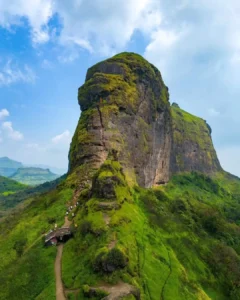
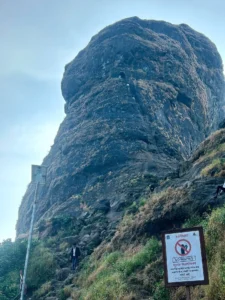
The Harihar Fort isn’t your typical hill station walk. This medieval fortress sits proudly in the Nashik district, and what makes it legendary are those jaw-dropping rock-cut stairs that look like someone carved a ladder straight into the mountain face. Locals call it “the stairway to heaven,” and honestly? They’re not exaggerating.
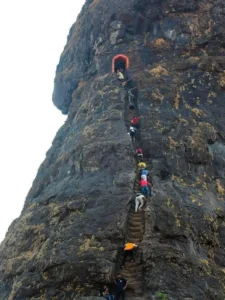
When I first attempted the Harihar Fort Trek, I thought I was reasonably fit. The first hour was pleasant—winding paths through villages, friendly dogs following me, farmers waving hello. Then I saw IT. The famous cliff face with those nearly vertical stairs. My heart skipped a beat, but that’s exactly what makes this trek unforgettable.
Where Exactly is Harihar Fort Located?
The Harihar Fort location is in the Nashik district of Maharashtra, near the holy town of Trimbakeshwar. If you’re wondering “where is Harihar Fort” on a map, it sits in the Sahyadri mountain range, about 40 kilometers from Nashik city.
Distance Breakdown Table
| From | Distance to Harihar Fort | Approximate Travel Time |
|---|---|---|
| Nashik to Harihar Fort Distance | 48 km | 1.5-2 hours by car |
| Trimbakeshwar to Harihar Fort Distance | 8 km | 20-30 minutes by car |
| Mumbai | 210 km | 4-5 hours by car |
| Pune | 180 km | 3.5-4 hours by car |
The base village, Nirgudpada, is where your trek actually begins. Getting to Harihar Fort, Maharashtra is pretty straightforward—most trekkers drive to the village, park their vehicles, and start the adventure.
The Harihar Fort Trek Experience: What to Expect
Phase 1: The Gentle Beginning
The Harihar Fort Trek distance from the base village is approximately 2 kilometers, but don’t let that fool you. The first kilometer is a pleasant walk through rural landscapes. You’ll pass small houses, meet curious children, and maybe even spot some peacocks if you’re lucky.
The Harihar weather plays a huge role here. During monsoons, everything turns emerald green, but the stairs become slippery—more on that later. In winter, the crisp air makes trekking comfortable, though mornings can be chilly.
Phase 2: The Moderate Climb
After the initial easy stretch, the path starts inclining. You’re now walking on a proper trail with some rocky sections. This is where you start feeling the burn in your calves, but the surrounding views of Maharashtra Harihar Fort and the valley below keep you motivated.
Phase 3: The Heart-Stopping Vertical Stairs
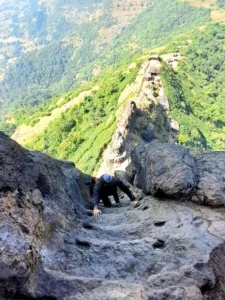
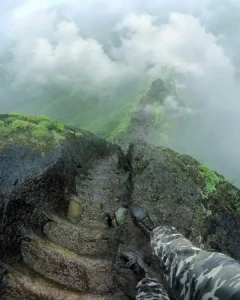
Here comes the showstopper. The Harihar Fort is famous for its 80-degree rock-cut stairs that stretch about 80 feet vertically up the cliff face. Iron chains are installed for support, and you’ll be gripping them tightly.
First-timers often freeze halfway up. I remember a fellow trekker literally hugging the rock face, refusing to look down. But here’s the secret: Don’t look down, focus on the next step, and trust the chains. Thousands have climbed before you, and you’ll make it too.
Pro tip: Wear shoes with excellent grip. I’ve seen people attempt this in sneakers and regret every step.
Harihar Fort Height and Summit Views
At 3,676 feet, the Harihar Fort height isn’t India’s tallest peak, but what it lacks in altitude, it makes up for in drama. The summit is relatively flat with ruins of ancient structures—remnants of the fort’s glorious past.
The Harihar Fort photos you’ve seen online? They don’t do justice to the real thing. Standing atop, you get 360-degree views of the Sahyadri ranges, distant waterfalls during monsoon, and on clear days, you can even spot other forts in the region.
There’s also a small Harihar Fort temple at the top—dedicated to Lord Hanuman. Many trekkers offer prayers here, partly from devotion, partly from gratitude for surviving those vertical stairs.
Harihar Fort History: Tales from the Past
The Harihar Fort history dates back to the 6th century during the reign of the Yadava dynasty. Later, it changed hands between the Mughals and Marathas multiple times. The fort was a strategic military outpost, offering surveillance over the surrounding trade routes.
Historical Timeline
| Period | Rulers | Significance |
|---|---|---|
| 6th-11th Century | Yadava Dynasty | Original construction |
| 15th Century | Bahmani Sultanate | Strategic military use |
| 17th Century | Marathas (Shivaji Era) | Fortification and expansion |
| 18th Century | British | Administrative use |
The Hari Hara Fort name itself is interesting—”Hari” refers to Lord Vishnu and “Hara” to Lord Shiva, symbolizing the unity of these two major Hindu deities. The fort’s architecture reflects a blend of Hindu and Islamic influences, evident in the remaining structures.
Safety Concerns: Understanding Accident Harihar Fort Nashik
Let’s address the elephant in the room: safety. Searches for “accident Harihar Fort Nashik” have increased over the years, and yes, accidents have occurred. But here’s the context—most incidents happen due to:
- Monsoon trekking when stairs are slippery
- Lack of proper footwear
- Attempting the trek without guides (for inexperienced trekkers)
- Overconfidence and carelessness
Safety Guidelines
- Never trek during heavy rains or when visibility is poor
- Use the iron chains at all times on vertical sections
- Trek in groups, never solo
- Inform someone about your trekking plans
- Carry a basic first-aid kit
- Stay hydrated but avoid carrying excess weight
The Nashik Harihar Fort authorities have improved safety measures with better chains and some railings, but personal responsibility is crucial.
Best Time for Harihar Fort Trek
Season-wise Breakdown
| Season | Months | Pros | Cons |
|---|---|---|---|
| Winter | October-February | Perfect weather, clear views, safe trails | Can be crowded on weekends |
| Summer | March-May | Less crowded, good visibility | Hot during midday (start early) |
| Monsoon | June-September | Lush green scenery, waterfalls | Slippery stairs, dangerous |
My recommendation: Plan your Harihar Fort Trek between November and January. The Harihar weather during these months is phenomenal—cool mornings, pleasant afternoons, and stunning sunset views.
What to Carry for Harihar Fort Trek
Essential Checklist
- Trekking shoes with ankle support and grip
- 2-3 liters of water per person
- Energy snacks (dry fruits, chocolate bars)
- Small backpack (don’t overload)
- Sun protection (cap, sunscreen, sunglasses)
- Basic first-aid kit
- Fully charged mobile phone
- Light windcheater (even in summer)
Don’t carry:
- Heavy camera equipment (use your phone)
- Excessive luggage
- Alcohol (seriously, don’t)
Photography Opportunities
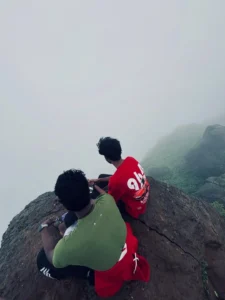
The Harihar Fort photos you can capture here are Instagram gold. Key photography spots include:
- The vertical stairs (get someone to click you from below)
- Summit panoramas (360-degree shots)
- Temple area (architectural shots)
- Cliff edge views (be careful!)
- Sunrise/sunset (if you’re camping overnight)
Nearby Attractions
Since you’re already in the area, consider visiting:
- Trimbakeshwar Temple (8 km away) – One of the 12 Jyotirlingas
- Brahmagiri Mountain – Source of Godavari River
- Anjaneri Fort – Believed birthplace of Lord Hanuman
- Nashik Vineyards – For a relaxing post-trek experience
Local Tips from Experienced Trekkers
- Start early (by 6-7 AM) to avoid afternoon heat and crowds
- Hire a local guide if you’re a beginner (available at base village)
- Negotiate guide fees beforehand (usually ₹300-500 per group)
- Carry cash for parking and small expenses
- Don’t litter—the Harihar Fort, Maharashtra is a natural treasure
Fitness Level Required
You don’t need to be an Olympic athlete for the Harihar Fort Trek, but basic fitness helps. If you can:
- Walk continuously for 2 hours
- Climb 10 floors without gasping
- Do 10 push-ups
You’re probably ready for this trek. The vertical stairs require upper body strength for pulling yourself up using chains, so some arm strength is beneficial.
Camping and Overnight Stays
While most people complete the Harihar Fort Trek as a day trip, camping at the summit is possible. However:
- No facilities are available at the top (no toilets, water sources)
- Carry everything you need
- Permission may be required from local authorities
- Weather can be unpredictable at night
Personally, I prefer the day trek—exhausting but rewarding enough to return home the same evening with incredible memories.
Conclusion: Why Harihar Fort Trek Deserves Your Time
The Harihar Fort Trek is more than just a physical challenge—it’s a journey through history, nature, and self-discovery. Those nerve-wracking vertical stairs will push you beyond your comfort zone, but the sense of achievement at the summit is unmatched.
Maharashtra Harihar Fort offers something rare: accessibility with adventure. You don’t need special permits, expensive equipment, or weeks of preparation. Just good shoes, decent fitness, and the courage to tackle those famous stairs.
Whether you’re a seasoned trekker looking for your next challenge or a beginner wanting to level up, the Harihar Fort, Maharashtra welcomes you. Just remember: respect the mountain, follow safety guidelines, and take nothing but photographs (and leave nothing but footprints).
Frequently Asked Questions (FAQs)
1. How difficult is the Harihar Fort Trek?
The Harihar Fort Trek is rated moderate to difficult primarily because of the 80-degree vertical stairs. The first two-thirds are relatively easy, suitable even for beginners with basic fitness. However, the final vertical section requires both physical strength and mental courage. First-timers might find it challenging but definitely achievable with proper preparation and care.
2. What is the Harihar Fort height and how long does the trek take?
The Harihar Fort height is 3,676 feet (1,120 meters) above sea level. The trek typically takes 2-3 hours to reach the summit from the base village of Nirgudpada. The descent takes slightly less time, around 1.5-2 hours. Including rest breaks and time spent at the top, plan for a total of 5-6 hours for the complete round trip.
3. Is Harihar Fort Trek safe for beginners?
Yes, but with precautions. Beginners can successfully complete the Harihar Fort Trek if they have basic fitness, proper footwear, and preferably trek with experienced companions or a guide. Avoid attempting during monsoons if you’re a first-timer. The installed iron chains on the vertical section make it safer, but you must be comfortable with heights and steep climbs.
Thank you for reading! If you enjoyed this trekking adventure, check out our previous article on:
- Buran Ghati Trek
- Kedarkantha Trek
- Triund Trek Height
- Nathula Pass height in feet
- Chandrashila Height in Feet
- Netravati Trek distance
- Chandrashila Height in Feet
- Manimahesh Trek Distance
- Churdhar Trek Distance
- Jalori Pass Trek
- Kheerganga Trek Distance
यात्रा से जुड़े बेहतरीन सुझाव और जानकारी के लिए TravelWikiTips.Com आपका सही साथी है।
अधिक जानकारी के लिए आप Wikipedia पर भी देख सकते हैं।
